


When severe weather hits or unexpected emergencies arise, communities rely on trusted local news outlets for timely updates. In northern Iowa and southeastern Minnesota, one of the most recognized sources for closure information is KIMT closings. From snowstorms and icy roads to power outages and public safety alerts, this platform keeps residents informed about changes to school schedules, business operations, and public services.
In this in-depth guide, we’ll explore what KIMT closings are, how they work, why they matter, and how families, students, and organizations can stay ahead of disruptions.
What Is KIMT?
KIMT is a CBS-affiliated television station based in Rochester, Minnesota. The station serves communities across southern Minnesota and northern Iowa, delivering local news, weather forecasts, sports coverage, and emergency updates.
One of the most frequently accessed features provided by the station is its closings and delays reporting system. During extreme weather or emergency events, this section becomes a primary source of information for thousands of residents.
Understanding KIMT Closings
KIMT closings refer to official announcements regarding:
- School cancellations
- Delayed openings
- Early dismissals
- Business closures
- Church and community event cancellations
- Government office shutdowns
These updates are typically issued during:
- Heavy snowstorms
- Ice accumulation
- Flooding
- Severe thunderstorms
- Extreme cold warnings
- Infrastructure issues
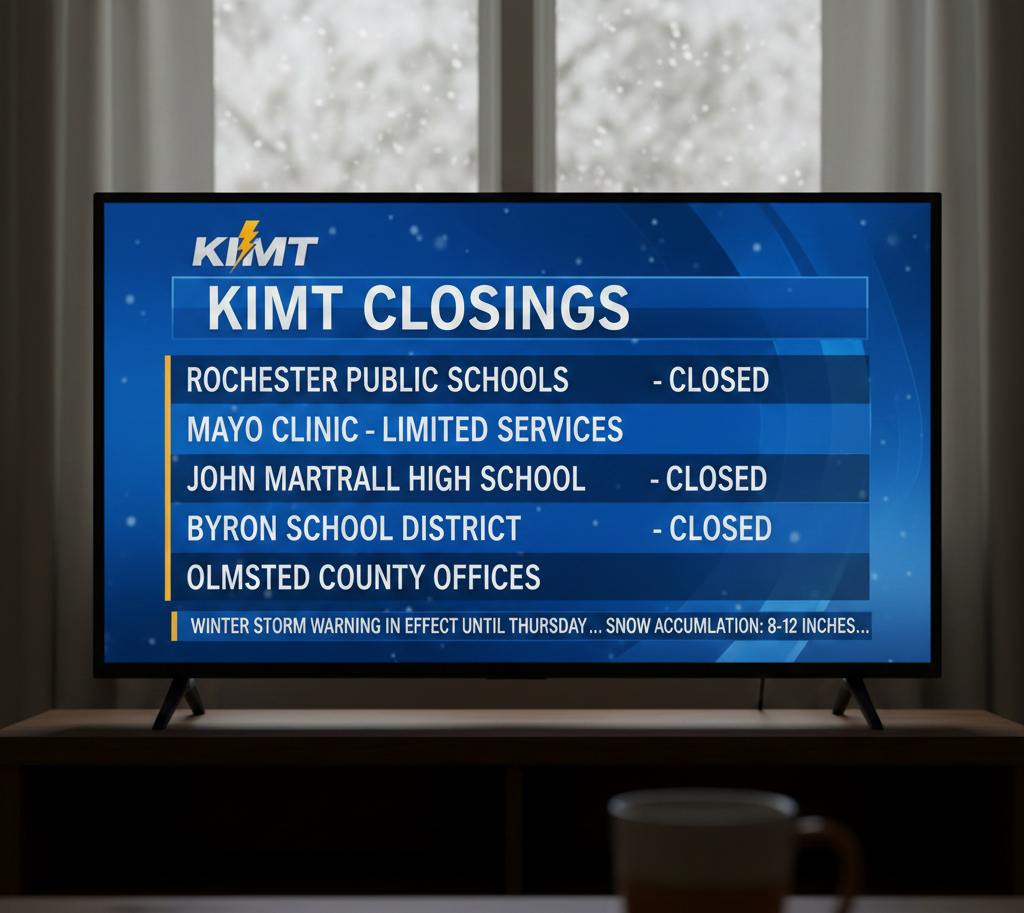
The closings page is updated in KIMT closings real time, allowing viewers to quickly determine whether their local institution is affected.
Why Closure Information Matters
1. Student Safety
Winter weather in Minnesota and Iowa can create dangerous road conditions. School closures help prevent accidents involving buses and teenage drivers. Parents depend on timely updates to make childcare arrangements and adjust work schedules.
2. Workplace Planning
Businesses rely on accurate KIMT closings information to determine staffing, remote work policies, or modified hours. Closure announcements help employees prepare accordingly.
3. Community Coordination
Public libraries, recreation centers, and religious institutions often follow school closure decisions. Centralized updates reduce confusion.
4. Emergency Awareness
Closures often signal broader community KIMT closings safety concerns. They serve as early indicators of hazardous conditions.
How KIMT Closings Are Reported
Closure reporting typically follows this process:
- Weather Forecast Monitoring – Meteorologists track developing storms.
- Institution Decision-Making – Schools and organizations assess local conditions.
- Submission of Closure Notice – Institutions notify the station.
- Verification and Publishing – Updates are posted online and broadcast on television.
- Continuous Updates – Changes are reflected as conditions evolve.
Because weather can shift quickly, it’s important to check for updates frequently rather than relying on earlier announcements.
Major School Districts Covered
The KIMT viewing area includes many districts across Minnesota and Iowa. Some commonly monitored areas include:
- Rochester
- Austin
- Albert Lea
- Mason City
Each district makes independent decisions KIMT closings based on road conditions, bus route safety, and facility readiness.
Weather Conditions That Trigger Closures
Heavy Snowfall
Snow accumulation can block roads and reduce visibility. Rural districts are particularly vulnerable when drifting snow covers highways.
Ice Storms
Freezing rain is often more dangerous than snow. Even small amounts of ice can create slick roads and hazardous walking conditions.
Extreme Cold
When wind chills drop to life-threatening levels, schools may close to protect students who walk or wait at bus stops.
Flooding
In warmer months, heavy rain can lead to road washouts and impassable routes.
Difference Between Closings and Delays
Understanding the terminology helps avoid confusion:
- Closing – The institution will not open for the day.
- Delay – Start time is postponed, typically by 1–2 hours.
- Early Dismissal – Students or employees are released before regular closing time.
- Virtual Learning Day – Students complete coursework remotely instead of attending in person.
Each type of update impacts transportation, meals, and scheduling differently.
How to Access KIMT Closings
Residents typically check updates through:
- The official website
- Television broadcasts
- Social media accounts
- Mobile weather alerts
- School district notifications
Many families refresh the closings page multiple times in the early morning during storms to confirm final decisions.
The Role of Meteorologists
Accurate forecasts are crucial in determining whether closures are necessary. Meteorologists analyze radar data, satellite imagery, temperature models, and road condition reports. When significant snowfall or freezing rain is predicted overnight, early announcements may be issued to give families time to prepare.
In uncertain situations, schools may initially delay openings to allow additional time for plowing and road assessments.
How Schools Decide to Close
School superintendents consider several factors:
- Road safety reports from transportation departments
- Weather forecasts and real-time conditions
- Temperature and wind chill levels
- Ability to heat and power facilities
- Input from neighboring districts
Safety is always the primary concern.
Economic Impact of Closings
While necessary for safety, closures can have economic consequences:
- Parents may need to miss work.
- Businesses experience reduced customer traffic.
- Hourly employees may lose wages.
- Childcare services become in high demand.
However, these short-term disruptions are often outweighed by the long-term benefits of preventing accidents and injuries.
Preparing for Potential Closures
Families in Minnesota and Iowa often prepare in advance for winter disruptions.
Suggested Preparations:
- Keep emergency supplies at home.
- Monitor weather forecasts regularly.
- Arrange backup childcare plans.
- Ensure devices are charged for updates.
- Stock groceries before major storms.
Proactive preparation reduces stress when closure announcements are made.
Community Response During Closures
Closures often bring a sense of shared experience. Neighbors help one another shovel driveways, local stores adjust hours, and community centers may open warming shelters during extreme cold events.
In many cases, local governments coordinate closely with media outlets to keep residents informed about road conditions and safety advisories.
Digital Advancements in Closure Reporting
Technology has improved how quickly updates are delivered. Instead of waiting for televised announcements, viewers can access real-time lists online. Push notifications and mobile alerts ensure that information reaches users instantly.
Interactive maps and scrolling ticker updates on broadcasts also improve accessibility.
Frequently Asked Questions About KIMT Closings
How early are closures announced?
Many decisions are made between 4:30 a.m. and 6:00 a.m., though severe storms may prompt earlier announcements.
Are all districts updated simultaneously?
No. Each institution submits its decision independently.
Can businesses request to be listed?
Yes, organizations typically submit requests directly to the station.
Do closures automatically mean after-school activities are canceled?
Often yes, but families should confirm with their specific organization.
The Importance of Reliable Local News
Local television stations play a vital role during emergencies. While national outlets cover major storms, local broadcasters provide hyper-specific information relevant to neighborhoods and districts.
Timely updates help prevent confusion and misinformation, especially when social media rumors spread quickly.
Tips for Staying Informed
To avoid missing important updates:
- Bookmark the closings webpage.
- Follow official station accounts.
- Enable mobile alerts.
- Confirm directly with your institution when uncertain.
- Avoid relying solely on unofficial social media posts.
Final Thoughts
KIMT closings serve as a critical communication tool for communities across southern Minnesota and northern Iowa. Whether dealing with heavy snowfall, icy roads, or unexpected emergencies, timely updates protect students, families, and workers
