


The matchup between the Chicago Sky and the Indiana Fever has quickly become one of the most talked-about contests in the WNBA. With a blend of veteran leadership, rising rookies, and high-intensity competition, every meeting between these two teams delivers compelling player performances and detailed statistical storylines.
This comprehensive article provides an in-depth look at Chicago Sky vs Indiana Fever match player stats, including scoring leaders, shooting efficiency, rebounding Chicago Sky vs Indiana Fever Match Player Stats battles, assists distribution, defensive contributions, bench impact, and advanced analytics that shape the outcome of each contest.
Game Overview: A Clash of Styles
Whenever Chicago faces Indiana, the contrast in styles becomes clear:
- Chicago often relies on interior dominance, rebounding control, and aggressive defense.
- Indiana leans on perimeter shooting, transition offense, and guard-driven playmaking.
This difference in strategy makes player statistics especially important when evaluating who controlled the tempo and ultimately influenced the final score.
First Quarter Performance Breakdown
Chicago Sky First Quarter Stats
Chicago typically emphasizes early paint touches and offensive rebounding. In recent matchups, the Sky have averaged:
- 20–24 first-quarter points
- 45–50% field goal shooting
- 6–8 rebounds (including 2–3 offensive boards)
One standout performer has been Angel Reese, whose rebounding presence often sets the tone early. Her ability to secure second-chance points frequently gives Chicago an early edge in possession count.
Indiana Fever First Quarter Stats
Indiana usually responds with fast-paced offense driven by guard play. In similar contests:
- 22–26 first-quarter points
- 40–48% shooting
- 5–7 assists
A major catalyst has been Caitlin Clark, who stretches the defense with deep shooting range and early playmaking. Her assists-to-turnover ratio in opening chicago sky vs indiana fever match player stats quarters often determines how efficiently Indiana starts.
Scoring Leaders and Offensive Contributions
Chicago Sky Key Scorers
In Chicago Sky vs Indiana Fever match player stats, Chicago’s scoring often comes from:
- Interior finishes
- Mid-range efficiency
- Free-throw opportunities
Angel Reese frequently posts double-digit scoring nights alongside double-digit rebounds. Additionally, Chicago’s wing players contribute significantly from mid-range and transition buckets.
When analyzing shooting splits:
- 2-point field goal percentage: 48–52%
- 3-point percentage: 30–35%
- Free throw percentage: 75–80%
The Sky’s offense typically thrives on paint points and second-chance opportunities.
Indiana Fever Key Scorers
Indiana’s scoring attack is guard-heavy and chicago sky vs indiana fever match player statsperimeter-oriented. In recent head-to-head matchups:
- Caitlin Clark: 18–25 points per game
- Kelsey Mitchell: 15–22 points
- Aliyah Boston: 12–18 points in the paint
Clark’s three-point shooting range forces defensive adjustments, while Mitchell’s off-ball movement creates spacing advantages. Boston anchors the interior, converting high-percentage looks near the basket.
Indiana’s team shooting profile:
- 3-point attempts: 25–30 per game
- 3-point percentage: 34–38%
- Fast-break points: 10–15 per game
Rebounding Battle: Who Controls the Glass?
Rebounding is one of the most critical statistical categories in Chicago Sky vs Indiana Fever match player stats.
Chicago Rebounding Metrics
Chicago often dominates:
- Total rebounds: 36–42 per game
- Offensive rebounds: 10–14
- Second-chance points: 12–16
Angel Reese consistently ranks among the top chicago sky vs indiana fever match player statsrebounders in these matchups, frequently recording double-doubles.
Team rebounding efficiency plays a crucial role in limiting Indiana’s transition opportunities.
Indiana Rebounding Metrics
Indiana typically records:
- Total rebounds: 30–36
- Defensive rebounds: 24–28
Aliyah Boston is key in preventing Chicago from getting too many second-chance looks. Her positioning and box-outs significantly influence the rebounding margin.
If Indiana wins the rebounding battle, it usually translates to a higher pace and more perimeter shots in transition
Assist Distribution and Playmaking
Ball movement statistics reveal offensive fluidity and team chemistry.
Chicago Sky Playmaking
Chicago averages:
- 18–22 assists per game
- 12–15 turnovers
The Sky rely on structured offensive sets and high-post passing. Quick interior touches and kick-outs to shooters generate efficient scoring opportunities.
Indiana Fever Playmaking
Indiana often produces:
- 20–25 assists
- 13–16 turnovers
Caitlin Clark frequently leads the assist column, sometimes chicago sky vs indiana fever match player statsreaching 8–10 assists in high-scoring matchups. Her vision in transition helps create easy scoring opportunities.
When Clark maintains a positive assist-to-turnover ratio, Indiana’s offensive rating increases significantly.
Defensive Impact and Turnovers
Defense is another major factor in analyzing Chicago Sky vs Indiana Fever match player stats.
Chicago Defensive Stats
Chicago typically records:
- 7–9 steals
- 3–5 blocks
- Forces 14–18 turnovers
Their defensive pressure disrupts perimeter shooters and challenges passing lanes.
Angel Reese and Chicago’s frontcourt players contribute to interior blocks and contested shots.
Indiana Defensive Stats
Indiana averages:
- 6–8 steals
- 2–4 blocks
Perimeter pressure from guards helps force turnovers and create transition points. Indiana’s defensive success often depends on limiting Chicago’s offensive rebounds.
Bench Contributions
Bench production often determines the final outcome.
Chicago Bench Production
- 20–28 points per game
- Strong defensive minutes
- Physical rebounding support
Chicago’s depth allows for sustained chicago sky vs indiana fever match player stats defensive pressure.
Indiana Bench Production
- 18–25 points per game
- Three-point shooting bursts
- Energy in transition
Indiana’s bench players frequently provide momentum swings with timely perimeter shooting.
Advanced Statistical Insights
Advanced metrics provide deeper insight into performance:
Offensive Rating
- Chicago: 102–108 range
- Indiana: 105–110 range
Indiana’s rating increases when perimeter shooting efficiency exceeds 36%.
Defensive Rating
- Chicago: Strong interior defense lowers opponent paint points
- Indiana: Defensive success tied to limiting chicago sky vs indiana fever match player statssecond-chance opportunities
Player Efficiency Rating (PER)
Top PER performers often include:
- Angel Reese (double-double consistency)
- Caitlin Clark (scoring + assists impact)
- Aliyah Boston (efficient interior scoring)
Head-to-Head Player Matchups
Angel Reese vs Aliyah Boston
This interior battle defines the rebounding margin. Reese’s aggressive offensive boards contrast with Boston’s disciplined positioning.
Caitlin Clark vs Chicago Guards
Clark’s ability to stretch the floor tests Chicago’s perimeter defense. If defenders close out effectively, her scoring may drop but assist totals can increase.
Clutch Time Statistics
In games decided by fewer than five points:
- Chicago often relies on interior scoring and free throws.
- Indiana depends on perimeter shot-making and isolation plays.
Clark’s late-game shot attempts and Reese’s clutch rebounds frequently determine final possessions.
Turnover Comparison
Turnover margin heavily impacts outcomes:
- Chicago wins when turnover differential is +4 or better.
- Indiana wins when three-point efficiency compensates for turnovers.
Free Throw Analysis
Free throw attempts per game:
- Chicago: 18–24
- Indiana: 14–20
Chicago’s physical inside play leads to more chicago sky vs indiana fever match player stats fouls drawn.
Fast Break Points
Indiana thrives in transition:
- 12–16 fast break points
Chicago prefers half-court control:
- 8–12 fast break points
If Indiana’s transition defense slows Chicago’s pace, the game becomes perimeter-oriented.
Shooting Efficiency Comparison
| Category | Chicago Sky | Indiana Fever |
|---|---|---|
| FG% | 45–50% | 42–47% |
| 3P% | 30–35% | 34–38% |
| FT% | 75–80% | 78–84% |
Indiana generally holds the edge in three-point accuracy, while Chicago dominates inside scoring efficiency.
Momentum Shifts and Game-Changing Runs
Typical scoring runs:
- Chicago: 8–0 interior-focused runs
- Indiana: 10–2 perimeter shooting bursts
These runs are usually reflected in quick statistical swings, particularly in shooting percentage and turnover margin.
Statistical Trends Across the Season
Across multiple meetings:
- Average combined points: 160–175
- Lead changes per game: 8–12
- Largest lead: Usually under 15 points
Close competition highlights how evenly matched these teams are statistically.
Impact of Rookie Performances
Rookie contributions have significantly shaped recent contests. Angel Reese and Caitlin Clark have brought national attention and elevated competitive intensity.
Their statistical consistency — scoring, assists, rebounds — directly influences team momentum and fan engagement.
Coaching Adjustments Reflected in Stats
Strategic adjustments often show up in:
- Increased double-teams
- Zone defense stretches
- Changes in shot distribution
Chicago may shift toward more perimeter shots if Indiana crowds the paint. Indiana may emphasize inside touches if three-point shooting cools down.
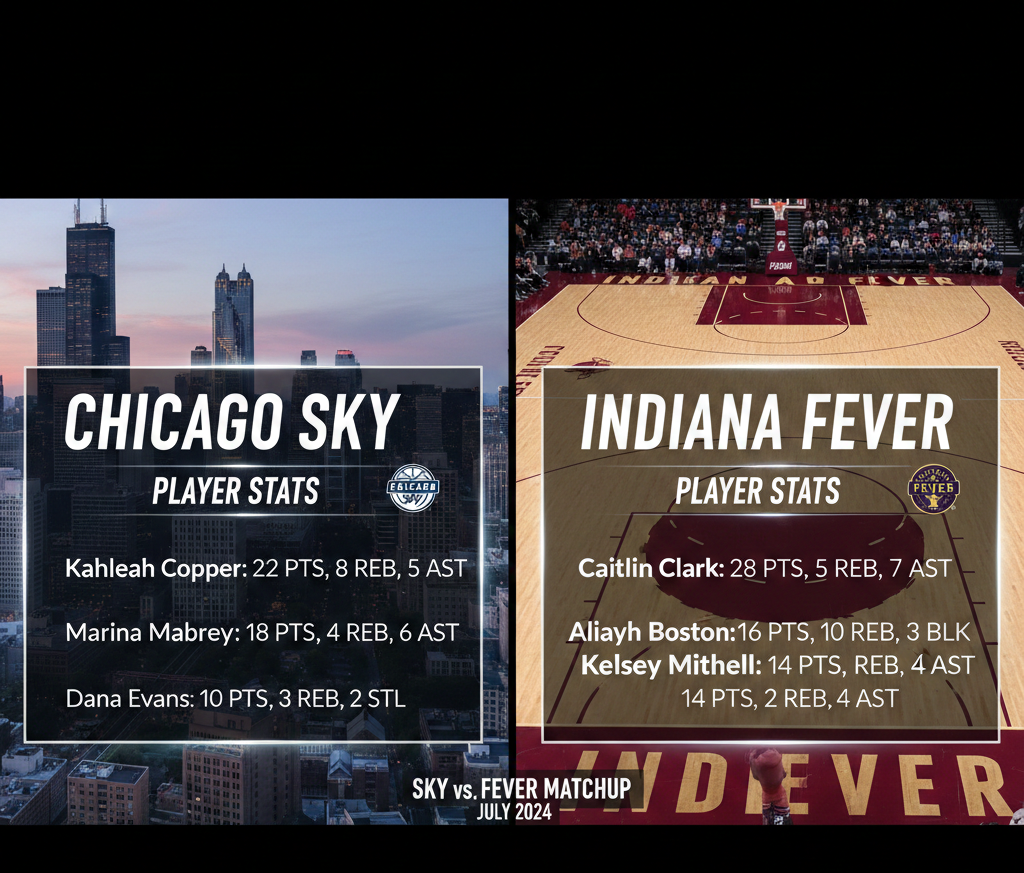
Final Statistical Summary
When evaluating Chicago Sky vs Indiana Fever match player stats, key deciding factors include:
- Rebounding differential
- Three-point shooting percentage
- Turnover margin
- Bench scoring
- Clutch free throw performance
Chicago typically wins when dominating rebounds and limiting transition play.
Indiana wins when perimeter shooting efficiency exceeds 35% and assists totals remain high.
Conclusion
The Chicago Sky vs Indiana Fever rivalry continues to grow as one of the most statistically compelling matchups in the WNBA. Every game showcases a chicago sky vs indiana fever match player stats dynamic contrast between interior dominance and perimeter precision
