


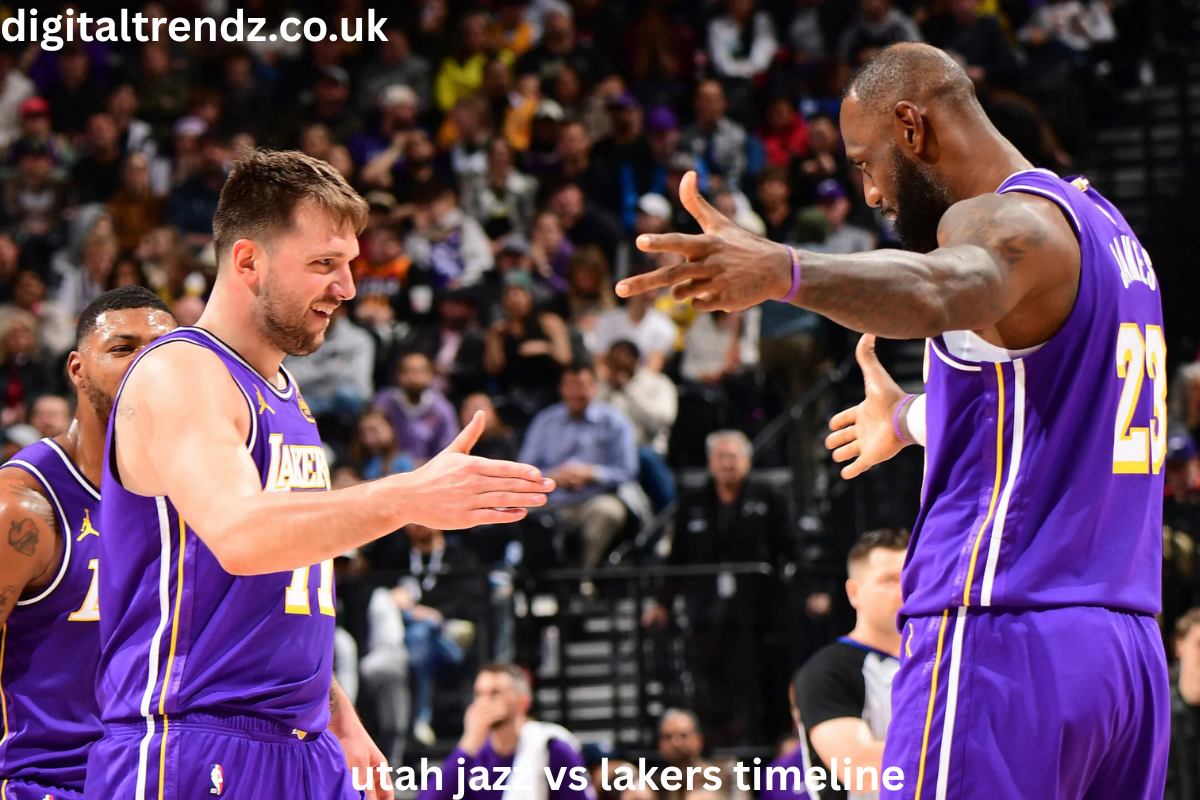
The Utah Jazz vs Los Angeles Lakers timeline is a story that spans more than four decades, filled with memorable moments, legendary players, and defining playoff battles. This rivalry encapsulates the essence of Western Conference basketball, from the early days of the Jazz’s arrival in Salt Lake City to the Lakers’ dominant “Showtime” era and beyond. The two franchises have met in high-stakes regular season games, heated playoff series, and unforgettable encounters that have shaped both teams’ legacies. Understanding this timeline requires exploring the growth of both franchises, iconic players, and the shifting power dynamics in the NBA over the years.
The rivalry is not just about wins and losses. It reflects contrasting styles of play, different approaches to team building, and changing eras in NBA history. From the disciplined precision of John Stockton and Karl Malone to the flair and superstar power of Magic Johnson, Kobe Bryant, and LeBron James, every era brought its own narrative to the matchup. Today, this timeline continues to evolve as younger stars step into the spotlight and the Lakers and Jazz strive to return to championship contention.
The Origins of the Utah Jazz and the Lakers Showmanship
The Utah Jazz were originally established as the New Orleans Jazz in 1974, relocating to Salt Lake City in 1979. The move introduced professional basketball to Utah and set the stage for future rivalry with established Western Conference powerhouses. During this period, the Lakers were ascending in the NBA, entering the “Showtime” era under the leadership of Magic Johnson, Kareem Abdul-Jabbar, and James Worthy. Their high-paced offense and charismatic style made Los Angeles a dominant force in the 1980s.
Early meetings between the Jazz and Lakers highlighted a contrast in experience and team identity. While the Lakers were collecting championships and national attention, the Jazz were focused on building a competitive roster. This foundational period laid the groundwork for what would become a long-running Western Conference rivalry. As Utah developed its team around promising talents like John Stockton and Karl Malone, these initial matchups foreshadowed the intense playoff encounters that would follow in later years.
The 1988 Playoffs: Utah Emerges as a Contender
The 1988 NBA Playoffs marked the first major clash between the Jazz and Lakers in postseason history. Utah had matured into a team capable of challenging elite competition, while the Lakers were still a dominant force in the Western Conference. Their Western Conference Semifinals series extended to a dramatic seven games, showcasing Utah’s grit and determination against a seasoned Lakers squad.
Although the Lakers ultimately won Game 7 and advanced to the NBA Finals, the series revealed Utah’s potential to compete with the league’s best. This encounter established a narrative of Utah as a resilient underdog capable of challenging basketball dynasties. The 1988 series also demonstrated the early chemistry between Stockton and Malone, setting the stage for their peak years in the late 1990s.
The Stockton-Malone Era and Jazz Dominance in the Late 1990s
The late 1990s represent the pinnacle of Utah Jazz basketball, driven by the Hall of Fame duo of John Stockton and Karl Malone. During this period, the Jazz were not only consistent playoff contenders but also serious championship challengers. In 1997, Utah faced the Lakers in the Western Conference Semifinals, defeating the young Lakers squad that featured rising stars Kobe Bryant and Shaquille O’Neal in five games. This victory signaled a shift in the rivalry and demonstrated the Jazz’s competitive maturity.
In 1998, the Jazz achieved a historic sweep against the Lakers in the Western Conference Finals, dominating Los Angeles in a four-game series that included a remarkable 112-77 victory. These wins marked the Jazz’s high point and solidified their place in NBA history as one of the few teams able to decisively challenge the Lakers during their transitional phase. The Stockton-Malone era remains synonymous with precision, teamwork, and consistent excellence, defining a memorable chapter in the rivalry timeline.
Early 2000s: Lakers Dynasty and the Shift in Power
As the new millennium began, the Lakers entered a new dynasty period with the formidable pairing of Shaquille O’Neal and Kobe Bryant under Phil Jackson. This era was characterized by dominance in the Western Conference and multiple championship victories. In the 2000 Western Conference Semifinals, the Lakers defeated the Jazz 4-2, reasserting their authority over Utah and setting the tone for a three-peat championship run from 2000 to 2002.
For the Jazz, this period represented a transitional phase. With Stockton nearing retirement and Malone eventually departing, Utah faced the challenge of rebuilding while remaining competitive in a Western Conference dominated by the Lakers. The early 2000s underscored the cyclical nature of NBA power dynamics, with Los Angeles reclaiming dominance and Utah navigating a post-championship era while maintaining a solid competitive identity.
Mid-2000s to 2010s: Transition and Rebuilding
Between 2003 and 2015, both teams experienced transitional periods that affected their rivalry. The Lakers continued to collect talent and pursue championship runs, notably with Kobe Bryant at the forefront, while the Jazz focused on rebuilding with a new core of players. Despite fewer high-stakes playoff matchups during this era, regular season games between Utah and Los Angeles remained competitive, often featuring standout performances that kept the rivalry relevant.
Utah invested in defensive foundations, drafting players such as Deron Williams, Al Jefferson, and later Gordon Hayward, creating teams capable of challenging strong opponents. Meanwhile, the Lakers experienced a mix of rebuilding seasons and resurgence, particularly during the Kobe-Pau Gasol era that produced championships in 2009 and 2010. These years illustrate the enduring nature of the rivalry even as both teams navigated periods of transition and team reformation.
Recent Rivalry: 2015-Present
From 2015 onwards, the Jazz and Lakers have renewed competition with a blend of emerging talent and evolving strategies. The Lakers, with LeBron James joining in 2018 and Anthony Davis later on, have sought to return to championship contention, while the Jazz have developed a strong young roster around Donovan Mitchell and Rudy Gobert. Modern matchups have featured thrilling regular season games with high scores, buzzer-beaters, and standout individual performances.
In the 2022-2023 season, the Lakers secured a narrow 121-119 victory over the Jazz in a game that highlighted Anthony Davis’s dominance in the paint. Such matchups illustrate how the rivalry continues to evolve, blending historical significance with modern athleticism and strategy. Fans continue to anticipate each game, knowing that even in a rebuilding or transitional period, the Jazz vs Lakers timeline is filled with memorable moments and competitive drama.
Head-to-Head Records and Statistical Insights
The all-time head-to-head record between the Jazz and Lakers highlights the ebb and flow of the rivalry. As of the 2025-26 season, the Lakers lead in total wins, including both regular season and playoff games, maintaining an advantage built over decades of strong rosters and championship runs. In regular season matchups, the Lakers hold approximately 123 victories to Utah’s 83, reflecting the franchise’s historical dominance in direct encounters.
In the playoffs, the rivalry has been more evenly balanced at times, with Utah claiming significant series victories during the late 1990s. These playoff moments are often remembered as career-defining for Stockton, Malone, and other Jazz players, while also representing challenges for the Lakers during transitional phases. This statistical context provides insight into how performance trends, player generations, and team strategies have shaped the rivalry over time.
The Significance of the Jazz vs Lakers Rivalry
The Utah Jazz vs Lakers timeline is significant not only for its statistics but also for its cultural and historical impact on the NBA. The rivalry showcases the contrast between disciplined, methodical teams like the Jazz and dynamic, superstar-driven teams like the Lakers. Each era brought new narratives, whether it was the Showtime Lakers in the 1980s, the Stockton-Malone Jazz in the 1990s, or modern teams building around stars and analytics-driven strategies.
This rivalry also highlights the importance of the Western Conference as a competitive arena where dynasties rise and fall. Each meeting tells a story about basketball evolution, talent development, and the strategic interplay between coaching philosophies and player execution. For fans and analysts alike, the Jazz vs Lakers timeline is a living history of NBA competition that continues to provide lessons and unforgettable moments.
Read More:ang3lblu33: Unique Digital Identity & Creative Username Guide
Conclusion: A Rivalry That Continues to Define NBA History
The Utah Jazz vs Lakers timeline is a rich tapestry of NBA history, spanning decades of dramatic encounters, championship pursuits, and iconic players. From early matchups in the 1980s to the peak of Jazz dominance in the late 1990s, through the Lakers’ dynasties of the 2000s, and into the modern era of young stars and rebuilding teams, this rivalry remains compelling. The Lakers may hold the statistical advantage overall, but the Jazz have delivered unforgettable victories that solidify their place in the rivalry’s lore.
As both franchises continue to evolve, the story of the Jazz vs Lakers is far from over. Each game adds a new chapter to a narrative defined by competition, strategy, and enduring passion. For NBA fans, this rivalry offers a unique lens through which to appreciate the history, culture, and excitement of professional basketball, ensuring that the timeline of these encounters will remain significant for generations to come.
