


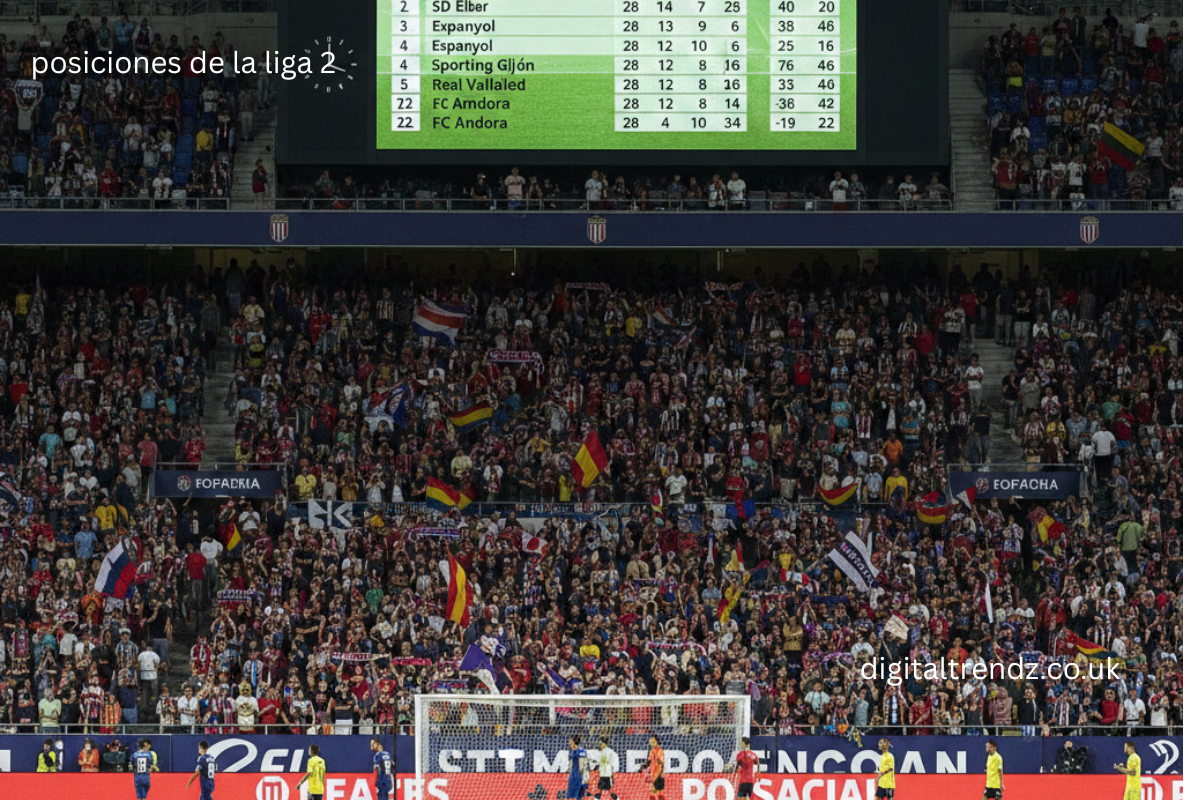
Spanish football is globally admired for its technical brilliance, passionate supporters, and competitive structure. While most international attention focuses on the top tier, the second division plays an equally dramatic and important role. For fans, analysts, and bettors alike, understanding the posiciones de la liga 2 is essential to tracking promotion battles, playoff drama, and relegation struggles throughout the season.
Spain’s second division, officially known as the Segunda División and commercially branded as LaLiga Hypermotion, is one of Europe’s most competitive second-tier leagues. Each season delivers surprise leaders, historic clubs fighting to return to the elite level, and emerging talents eager to prove themselves.
This in-depth guide explains how the standings work, how points are calculated, what determines promotion and relegation, and which clubs frequently shape the top and bottom of the table.
Understanding the Structure of Spain’s Second Division
The Segunda División consists of 22 teams competing in a long and demanding season. Each club plays:
- 42 matches total
- 21 home games
- 21 away games
The league typically runs from August to late May or early June. Because of the high number of fixtures, consistency becomes more important than short-term momentum.
How Points Are Awarded
The league table follows the standard football point system:
- Win: 3 points
- Draw: 1 point
- Loss: 0 points
When analyzing posiciones de la liga 2, clubs are ranked by:
- Total points
- Head-to-head results (if tied)
- Goal difference
- Goals scored
Head-to-head tiebreakers often create intense scenarios near the end of the season, especially in playoff and relegation battles.
Promotion to La Liga: The Ultimate Goal
The primary objective for every ambitious club is promotion to Spain’s top tier.
Automatic Promotion
- 1st place: Promoted directly
- 2nd place: Promoted directly
Finishing in the top two guarantees entry into Spain’s highest competition the following season.
Promotion Playoffs
Teams finishing:
- 3rd
- 4th
- 5th
- 6th
enter a playoff system. The playoffs involve two semifinals and a final, played over two legs. The winner earns the third and final promotion spot.
Because of this format, even teams finishing outside the top two can still achieve promotion. This keeps the table highly competitive until the final matchday.
Relegation: The Other Side of the Table
At the bottom of the standings:
- 19th
- 20th
- 21st
- 22nd
are relegated to the third tier.
Relegation battles are often just as dramatic as promotion races. Clubs separated by a single point can see their entire future change in the final weeks.
Why the Standings Matter So Much
Unlike smaller leagues, Spain’s second division includes many historically significant clubs. Some have played in European competitions in the past. Others have long-standing fan bases and major stadiums.
Because of this:
- Financial stability depends heavily on promotion.
- Youth development is influenced by league status.
- Player recruitment strategies shift based on table position.
A club near the top might invest in short-term reinforcements, while a mid-table team could focus on long-term development.
Historic Clubs Frequently Seen in the Standings
Over the years, several well-known teams have cycled between the top and second divisions.
Real Zaragoza
One of Spain’s historic clubs, Real Zaragoza has spent multiple seasons fighting for promotion. Whenever they appear near the top of the standings, expectations rise quickly due to their legacy and large fan base.
Sporting de Gijón
Sporting posiciones de la liga 2is another club with deep roots in Spanish football. Their presence in playoff positions often signals a strong, disciplined campaign.
Real Valladolid
Often bouncing between divisions, Real Valladolid is known for strong organizational structure and immediate promotion ambitions whenever relegated.
SD Eibar
Eibar has proven that smaller clubs can compete at high levels. Their tactical discipline frequently keeps them near playoff contention.
Levante UD
Levante brings top-flight experience and typically builds squads capable of challenging for direct promotion.
Real Oviedo
A historic side with passionate supporters, Oviedo often pushes for playoff qualification.
Racing Santander
Racing’s position in the table often reflects their balance between youth and experienced players.
CD Tenerife
Playing from the Canary Islands, Tenerife posiciones de la liga 2 frequently competes strongly at home, impacting their overall table performance.
Key Phases of the Season and Their Impact on the Table
Early Season (Matchdays 1–10)
During the opening phase:
- Teams test tactical systems.
- New signings adapt.
- The table is unstable.
Early leaders are not always promotion posiciones de la liga 2 candidates. However, a strong start builds confidence and creates cushion points.
Mid-Season (Matchdays 11–30)
This is where consistency becomes visible. Clubs that can manage injuries, suspensions, and fixture congestion begin separating themselves.
Mid-table teams often decide whether to:
- Push for playoffs
- Maintain stability
- Avoid relegation
Final Stretch (Matchdays 31–42)
The final 10–12 matches define everything. Small details matter:
- Goal difference swings
- Direct head-to-head clashes
- Psychological pressure
Promotion and relegation battles frequently go down to the final matchday.
Tactical Trends That Influence Standings
The Segunda División is known for tactical discipline rather than free-flowing attacking football. Many matches are tight and defensive.
Common Tactical Characteristics
- Compact defensive lines
- Quick counterattacks
- Emphasis on set pieces
- Physical midfield battles
Because of this, teams with:
- Strong defensive records
- Efficient strikers
- Reliable goalkeepers
tend to remain posiciones de la liga 2 near the top positions.
Financial Impact of League Positions
Promotion to La Liga significantly increases:
- Television revenue
- Sponsorship opportunities
- International visibility
Remaining in the second division offers moderate financial stability, but relegation to the third tier can drastically reduce revenue streams.
For this reason, every position in the standings matters—not just the top and bottom.
Statistical Indicators That Predict Table Movement
Fans analyzing posiciones de la liga 2 often look beyond points alone. Important metrics include:
1. Goal Difference
Teams with positive goal differences typically sustain their position better.
2. Home vs Away Form
Home dominance can compensate for weaker away performance. However, promotion contenders usually perform well in both environments.
3. Defensive Record
The fewest goals conceded is posiciones de la liga 2 often a better predictor of success than the most goals scored.
4. Momentum Over Last Five Matches
Short-term form provides clues about upcoming table changes.
Youth Development and Emerging Talent
Spain’s second division is also a development ground for future stars. Many players who later shine in La Liga first prove themselves here.
Young talents often:
- Gain regular playing time
- Experience high-pressure matches
- Improve tactical understanding
Clubs balancing youth and experience often climb steadily in the standings.
Rivalries That Shape the Table
Regional rivalries influence not only fan excitement but also standings.
Examples include:
- Northern rivalries
- Andalusian derbies
- Historical promotion clashes
These matches can shift momentum dramatically.
Comparing Segunda División to Other European Second Divisions
Spain’s second tier is often compared to:
- England’s Championship
- Italy’s Serie B
- Germany’s 2. Bundesliga
Unlike some leagues where finances dominate, Spain’s competition frequently rewards tactical organization and youth development.
The long 42-game schedule posiciones de la liga 2 makes endurance a decisive factor.
Promotion Playoff Drama
The playoff format adds unpredictability. A team finishing 6th can still achieve promotion if they peak at the right moment.
Playoff advantages:
- Higher-ranked teams host second legs.
- League position may determine advancement if aggregate scores tie.
This system keeps positions 3 through 6 highly competitive until the end.
The Role of the Royal Spanish Football Federation
The Royal Spanish Football Federation oversees competition regulations, refereeing standards, and disciplinary measures.
Their rules determine:
- Tiebreaking procedures
- Suspension policies
- Scheduling adjustments
Understanding these posiciones de la liga 2 regulations helps explain certain movements in the standings.
How Relegated Teams Influence the Next Season
Clubs relegated from La Liga often enter the second division with:
- Stronger squads
- Larger budgets
- Promotion expectations
However, adaptation is not guaranteed. Many relegated teams struggle against highly motivated opponents accustomed to the division’s physical demands.
Psychological Pressure and Performance
As the season progresses:
- Promotion candidates face media scrutiny.
- Relegation-threatened teams experience survival anxiety.
Mental strength becomes as important as tactical ability.
Coaches often rotate players strategically to maintain energy and morale.
Digital Platforms and Fan Engagement
Modern supporters follow standings through:
- Official league websites
- Mobile applications
- Sports news platforms
- Social media
Real-time updates allow posiciones de la liga 2 fans to track live changes during matchdays, especially when multiple games are played simultaneously.
Factors That Commonly Shift Table Positions
- Long injury lists
- Managerial changes
- January transfer window signings
- Fixture congestion
- Red cards and suspensions
Even small squad depth differences can significantly influence final rankings.
Long-Term Patterns in the Standings
Historically:
- Defensive teams maintain steady climbs.
- Clubs with strong academy systems perform sustainably.
- Teams relying solely on short-term spending often fluctuate.
Analyzing multi-season data reveals recurring patterns among promotion winners.
The Importance of Goal Difference Late in the Season
Goal difference becomes critical when teams are tied on points.
A single late goal:
- Can determine automatic promotion
- Can push a club into playoffs
- Can save a team from relegation
Because of this, teams often continue attacking even when already leading.
Media Attention and Its Influence
Spanish sports media intensely covers promotion battles. Increased exposure can:
- Boost player motivation
- Increase pressure
- Influence referee scrutiny
Clubs with experienced squads usually handle this better.
Travel Demands and Geographic Challenges
Spain’s geography affects scheduling:
- Mainland trips
- Island travel (such as to Tenerife)
- Long northern-to-southern journeys
Travel fatigue can subtly posiciones de la liga 2 impact performance and, ultimately, standings.
The Final Matchday Scenario
The last round posiciones de la liga 2 of fixtures often features:
- Simultaneous kickoffs
- Live table updates
- Rapid shifts in rankings
Fans experience constant emotiona posiciones de la liga 2 l swings as goals in different stadiums alter the final order.
Why Following the Standings Is So Engaging
Tracking posiciones de la liga 2 offers:
- Strategic insight
- Emotional drama
- Long-term storylines
- Tactical appreciation
Unlike posiciones de la liga 2 tournaments, league standings reward consistency over months of competition.
Conclusion
Spain’s second division remains one of Europe’s most captivating competitions. The battle for promotion, the tension of relegation, and the presence posiciones de la liga 2 of historic clubs make every match significant.
